
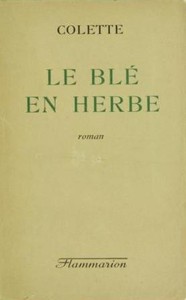
Le blé en herbe: roman by Colette
Colette's Le blé en herbe (often translated as The Ripening Seed) is a quiet storm of a novel. Published in 1923, it feels startlingly modern in its emotional precision.
The Story
We meet Phil and Vinca, sixteen-year-olds who have spent every summer together in a rented house on the Brittany coast. Their friendship is a private universe of inside jokes, shared swims, and unspoken understanding. They're on the cusp of romance, but it's a hesitant, innocent thing. Their world is disrupted by the arrival of Mme. Dalleray, a sophisticated and bored widow from Paris. She sees Phil not as a boy, but as a fascinating project. With subtle flattery and the allure of her adult world, she begins to seduce him. The novel unfolds over that single summer, charting the devastating distance that grows between Phil and Vinca. Every secret meeting Phil has with Mme. Dalleray is a betrayal Vinca feels but can't fully name. The climax isn't a grand event, but a moment of painful, irreversible realization about what has been lost.
Why You Should Read It
Colette is a master of atmosphere and nuance. She makes you feel the salt spray and the chill of the evening air. But her real genius is in capturing the messy, confusing transition from childhood. Phil isn't a villain; he's a boy intoxicated by a new kind of attention, clumsily trying on adulthood. Vinca's hurt is palpable and real—it’s the agony of being left behind. The book is painfully honest about how first loves often end, not with a bang, but with the slow seep of change. It also offers a sharp, though not cruel, look at the selfishness of the adult world intruding on the young.
Final Verdict
This is a perfect read for anyone who loves character-driven stories where the real action is internal. If you enjoyed the emotional tension of novels like Call Me by Your Name or the bittersweet nostalgia of Bonjour Tristesse, you'll find a kindred spirit here. It's also a brilliant pick for readers interested in early 20th-century literature that focuses on women's (and girls') inner lives. Fair warning: it's a short book, but it's dense with feeling. Don't rush it. Let Colette's gorgeous, precise prose wash over you, and prepare for that final, haunting scene to stick with you for days.
The copyright for this book has expired, making it public property. It serves as a testament to our shared literary heritage.
Emma Walker
2 years agoClear and concise.
Ethan Gonzalez
1 year agoThe index links actually work, which is rare!
Carol Johnson
2 years agoI stumbled upon this title and it challenges the reader's perspective in an intellectual way. A valuable addition to my collection.
James Clark
1 year agoA must-have for anyone studying this subject.






Elijah Martinez
4 months agoVery interesting perspective.