
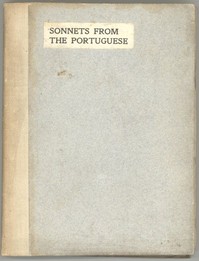
Sonnets from the Portuguese by Elizabeth Barrett Browning
Let's clear something up first: this book has nothing to do with Portugal. The title was a clever little disguise. Elizabeth Barrett Browning was a celebrated but very sickly poet, living as a semi-invalid under her strict father's roof. Enter Robert Browning, a younger, dashing poet who wrote her a fan letter. They started secretly writing to each other, then secretly meeting, and fell deeply in love. Her father forbade any of his children from marrying, so their relationship was a rebellion. This sequence of 44 sonnets is the private record of that extraordinary journey, written for Robert's eyes only. She charts her transformation from a woman who believed her life was confined to a sickroom to someone who dares to hope for a shared future.
Why You Should Read It
Forget the idea of Victorian love poetry being polite and distant. This is shockingly intimate. Elizabeth doesn't just say 'I love you.' She writes about the sheer shock of being loved, the guilt of her own past sadness, and the fear that it might all be a dream. My favorite sonnet, number 43 ('How do I love thee? Let me count the ways'), is famous for a reason, but it's even more powerful when you read the anxious, doubting poems that come before it. You feel her guard coming down, brick by brick. It’s a masterclass in how to express overwhelming emotion without using a single cliché. She makes the sonnet form—a strict 14-line structure—feel as natural as a heartbeat.
Final Verdict
Perfect for anyone who's ever been skeptical about poetry, or who thinks classics can't feel urgent and real. It's also a gorgeous pick for romantics, history lovers interested in a true literary love story, and anyone who needs a reminder that it's never too late for a new beginning. You don't need a literature degree; you just need a heart. Keep a copy on your shelf for when you want to remember what love sounds like in its purest, most vulnerable form.
There are no legal restrictions on this material. Thank you for supporting open literature.
James Miller
10 months agoAfter a thorough walkthrough of the table of contents, the historical context mentioned in the early chapters is quite enlightening. It’s a comprehensive resource that doesn't feel bloated.
Liam Moore
2 years agoVery interesting perspective.
Deborah Wilson
1 year agoSimply put, the emotional weight of the story is balanced perfectly. Truly inspiring.
Melissa Nguyen
1 year agoUsed this for my thesis, incredibly useful.
Jessica Garcia
1 year agoUnlike many other resources I've purchased before, the language used is precise without being overly academic or confusing. Truly a masterpiece of digital educational material.