
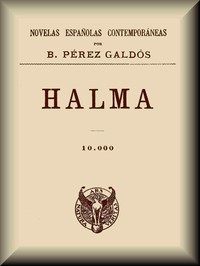
Halma by Benito Pérez Galdós
Benito Pérez Galdós is often called Spain's Dickens, and Halma shows you exactly why. He had a genius for observing society and wrapping big ideas inside very human stories.
The Story
The book follows Nazarín Halma, a pious and wealthy widow who inherits a large estate. Driven by her intense Catholic faith, she decides to use her fortune not for a life of luxury, but to establish a religious community. Her goal is to create a sanctuary for the poor, the sick, and the socially rejected—a perfect, charitable utopia where everyone lives in harmony and devotion. She gathers a group of misfits, including her cynical cousin, a reformed criminal, and various down-on-their-luck souls, and sets her rules.
But here's where it gets interesting. Halma's vision is rigid. She believes her way is the only path to salvation and moral living. The people she 'saves,' however, have their own ideas. They bicker, they challenge her authority, and their messy human flaws keep bubbling to the surface. The heart of the plot is the growing tension between Halma's idealistic dream and the chaotic reality of the people she's trying to help. It becomes a battle of wills, exposing the thin line between saintly sacrifice and sheer stubbornness.
Why You Should Read It
I loved this book because it refuses to give easy answers. Halma is not a simple hero or a villain. She's genuinely trying to do good, but her methods are infuriating. Galdós makes you think: Is she a selfless saint, or is her charity just another form of pride and control? The characters around her are equally complex—neither wholly grateful nor wholly wicked. The novel digs into the psychology of why we help others and what we really expect in return. It's a brilliant, subtle look at the conflicts within 19th-century Spanish society—between faith and reason, tradition and change, the individual and the community—all played out in a single country house.
Final Verdict
This is a book for readers who enjoy rich character studies and thoughtful questions over fast-paced action. If you like novels that explore moral gray areas and the complexities of human motivation (think George Eliot or some of Henry James's work), you'll find a lot to chew on here. It's also a fantastic pick for anyone interested in historical fiction that feels surprisingly modern in its concerns. Halma is a quiet, penetrating novel that stays with you, making you question the very nature of good intentions long after you've turned the last page.
This work has been identified as being free of known copyright restrictions. Access is open to everyone around the world.
Ethan Lewis
1 year agoJust what I was looking for.
Kevin Martinez
1 year agoFive stars!
Ethan Walker
4 months agoSolid story.





Brian Rodriguez
1 year agoJust what I was looking for.