1

Progressive Morality: An Essay in Ethics — Story, Setting & Ideas
(0 User reviews)
92
Project Gutenberg
2004
Not confirmed
Ethics, Evolutionary
Readers of public-domain and historical texts
Project Gutenberg digital edition
en
Edition facts
Words
36,871
Reading time
161 min
Text sections
3
The source record for Progressive Morality: An Essay in Ethics — Story, Setting & Ideas measures this digital text at 36,871 words, 2 hr 41 min estimated reading time, and 3 detected text sections.
The text analysis averages about 38.9 words per sentence, while the detected sections provide another way to judge how the source is divided.
Project Gutenberg metadata also associates the work with “Ethics, Evolutionary,” connecting these edition facts with the source record’s subject description.
Source:
Project Gutenberg record #12035
Thomas Fowler's 1884 essay argues that morality evolves with human welfare, using historical examples like cannibalism and marriage customs to show how conduct adjusts to changing conceptions of well-being.
Read the complete public-domain text at its original source.
Read on Project GutenbergThomas Fowler opens Progressive Morality by asserting that both the theory and practice of morality have advanced alongside human intelligence and civilisation. He immediately frames morality as a subject open to reasoning, investigation, and teaching, where the less intelligent learn from the more intelligent, and the latter face new problems. This sets the stage for a scientific, practical approach to ethics, grounded in observable change rather than fixed dogma.
From Savage Customs to Moral Progress
Fowler grounds his argument in concrete, sometimes shocking examples. He discusses the practice among savage tribes of killing and eating aged parents during war, explaining that this was originally motivated by a desire to save them from worse torture by enemies. Later, tribes discovered more humane methods, such as building strong places to leave the feeble at home. Similarly, he traces changing marriage customs among barbaric tribes, noting that they were originally framed on reasons of convenience and later revised as views of well-being shifted to include purity, closer attachment, and better care of children. These examples illustrate his central claim: changes in moral conduct are moulded by changes in opinion about what is best for individuals, families, or tribes. The pattern is consistent: increased experience, observation, and reflection expand and rectify our conceptions of human welfare, and conduct and sentiments are readjusted accordingly.
The Role of the Social Reformer
Fowler then considers what happens when moral rules become outdated. He describes how rules, once accumulated, often become enshrined in sacred books, codes, or authoritative traditions, and may be stereotyped for ages. When these rules grow unsuited to altered circumstances and bear harshly on individuals, a social reformer arises. The reformer's method is not to appeal to force or rhetoric, but to demonstrate how existing rules fail to achieve their original ends, how better rules would serve those ends, how the current rules oppress certain classes, and how the community is disadvantaged compared to neighbours. All these arguments, Fowler says, reduce to the claim that the existing rules oppose the well-being of the state and that the benefits of change outweigh any disturbance. This pragmatic, welfare-based reasoning is, for Fowler, the only legitimate resource for reform apart from force or imposture.
The Scientific Conception of Morality
In his preface, Fowler states his aim: to exhibit a scientific conception of morality in a popular form, with a view to practical applications rather than theoretical difficulties. He deliberately avoids controversy, makes few references to other authors, and dispenses with footnotes. He believes his views are those winning acceptance among the more instructed and reflective men of his day, with only a few back eddies of modern thought opposing them. The book is independent of a larger work on the 'Principles of Morals' he had begun with the late Professor Wilson, which remained unfinished. Fowler's long-held belief is that theoretical ethics would be less disputed and more intelligible if considered with direct reference to practice. This little book, he trusts, furnishes an example of such treatment.
Structure and Approach of the Essay
The essay is divided into five chapters. The first introduces the sanctions of conduct. The second examines the moral sanction or moral sentiment, its functions, and the justification of its claims to superiority. The third analyzes the formation of the moral sentiment and its education and improvement. The fourth discusses the moral test and its justification. The fifth provides examples of the practical application of the moral test to existing morality. This structure moves from foundational concepts to practical application, consistent with Fowler's stated goal of brevity and practical orientation. The excerpts show that Fowler writes in a clear, expository style, using historical and anthropological evidence to support his arguments. He avoids abstract speculation, instead grounding his claims in observable human behaviour and social change.
Readers approaching Progressive Morality should expect a concise, evidence-driven argument that treats morality as a dynamic product of human experience and reflection. Fowler's use of specific historical practices—from cannibalism to marriage customs—provides concrete anchors for his theoretical claims. The essay rewards attention to how he links changes in conduct to changes in conceptions of well-being, and how he positions the social reformer as a rational agent of moral progress.
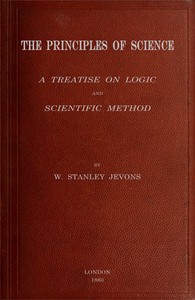
I’ve often thought Fowler’s Progressive Morality and that other volume, The principles of science — Context and Discussion, share a quiet patience. Both watch how ideas settle into shape, how a custom or a law becomes something we can examine without reverence. They sit well together, like old friends who never needed to argue aloud.
There are no reviews for this eBook.
There are no comments for this eBook.
Reader reflection
How will you remember this book?
Save your reaction, strongest insight, and memorable passage.
Your progress
0
/
10
2
Was reading this book enjoyable?
3
How likely are you to recommend this book?
4
How easy was the book to follow?
5
Did it raise ideas you would like to talk about?
6
Was the book what you thought it would be?
7
What was the strongest part of the book?
8
What did you think about the pace?
9
What changed or sharpened your thinking?
10